Choosing and booking
Mongolian folk show in Ulaanbaatar
What a Mongolian folk show in Ulaanbaatar covers, how the plain ticket and the hotel-transfer option differ, and what to check before you settle on a date.
Book the Ulaanbaatar show ↗Quick answer
Book the 90-minute traditional music and dance show if you want throat singing, the horsehead fiddle, costumed dance and contortion in one sitting. The ticket is the performance itself, and a hotel transfer is an option you add when you pick the date. The booking page names the hall for your date and shows the show days, which shrink in winter. Filming costs extra at the venue, and free cancellation runs to 24 hours ahead.
What this ticket is
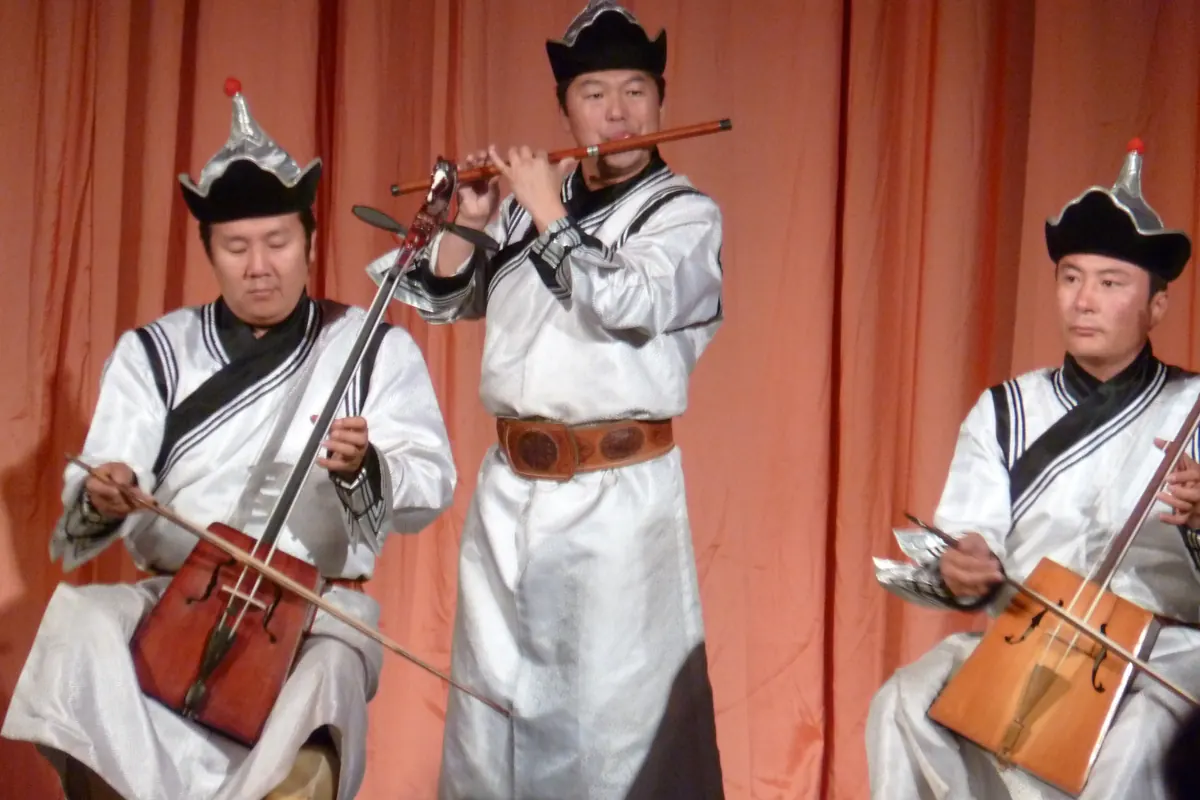
The ticket is a seat at a traditional Mongolian music and dance performance in Ulaanbaatar, about 90 minutes long. On stage you can expect throat singers, musicians on indigenous instruments, dancers in costume, contortionists and acrobats, with a live orchestra playing. The provider, Travel Mongolia, sells it as a performance ticket and not as a tour, so the hours around it are yours to plan. A hotel transfer is an option you tick on the booking page, and the same page shows the start times for each date. Programmes change, so read the list above as an outline of the show and not as a fixed running order.
What you will hear and see
Mongolian folk programmes are built from a few old art forms, and each has its own guide on this site. Throat singing, called khöömei, lets one singer sound two notes at once. The morin khuur is a two-stringed fiddle topped with a carved horse head. Dance in costume draws on traditions made inside the felt tent known as the ger. Contortionists and acrobats bring the athletic side of the programme; accounts of Mongolian contortion link it to dance and to Buddhist training, with the Mongolian State Circus as the main route into professional training. Nobody needs any of this beforehand, but a few minutes of background makes the first throat note easier to place.
- Throat singing: a drone with a whistling melody above it
- The horsehead fiddle and other Mongolian instruments
- Dance in colourful traditional costume
- Contortion and acrobatics
Read next: Mongolian throat singing: khöömei
Which hall, which day
Confirm two things before you plan anything else: the hall and the date. The booking page names the venue for the date you choose, so take that address to your driver or your map. In winter the show runs on fewer days of the week, which means some weekdays show no seats at all. If your travel dates are fixed, open the calendar first and build the rest of your Ulaanbaatar days around a date that is open. Start times sit on the same page, and your confirmation repeats the time you picked, so keep that email within reach on the day.
Ticket only, or with a hotel transfer?
The plain ticket gets you into the performance. The transfer version adds a ride from your hotel, chosen as an option when you select the date, and the booking page gives the transfer terms for each date. Read them before you pay, including whether the ride covers the trip back. Take the transfer if you would rather not work out a route to the hall yourself. Take the plain ticket if you already have a driver or are staying nearby. Either way, work out how you will get back before the performance starts, since a ride home is easier to settle beforehand than at the door.
Photos and filming
Phones stay in pockets unless you pay. Taking photos or filming the performance carries an extra charge, settled at the venue, so decide beforehand whether footage is worth it to you. There is also a case for leaving the camera away: the sound is the point of a throat-singing item, and the overtone melody is easier to follow when you are not framing a shot. If you do pay, ask at the door how the charge works for your hall and your device.
What guests describe
Guests who review the show describe a fast, varied hour. Reviewers come from Asia, Europe, Australia and North America, and the average is 4.6 out of 5 across 123 verified reviews. Segments are short, so a style you care for less passes quickly, and the singing, the instruments and the dance each get their turn. Guests single out the contortion, the costumes and the sound and lighting. A few mention that the hall is modest and a little dated, which is worth knowing before you arrive. Some say they came away having learned something about Mongolian dance and music traditions.
Stairs and access
The show carries a wheelchair-accessible tag. Some guests mention climbing stairs to reach the hall, so if step-free access matters to you, use the booking page to confirm the route for your date before you pay. The same goes for small children and for anyone who finds stairs hard: ask first, because the answer depends on the hall, and the hall is confirmed for each date on the booking page.
Other ways to meet the same arts
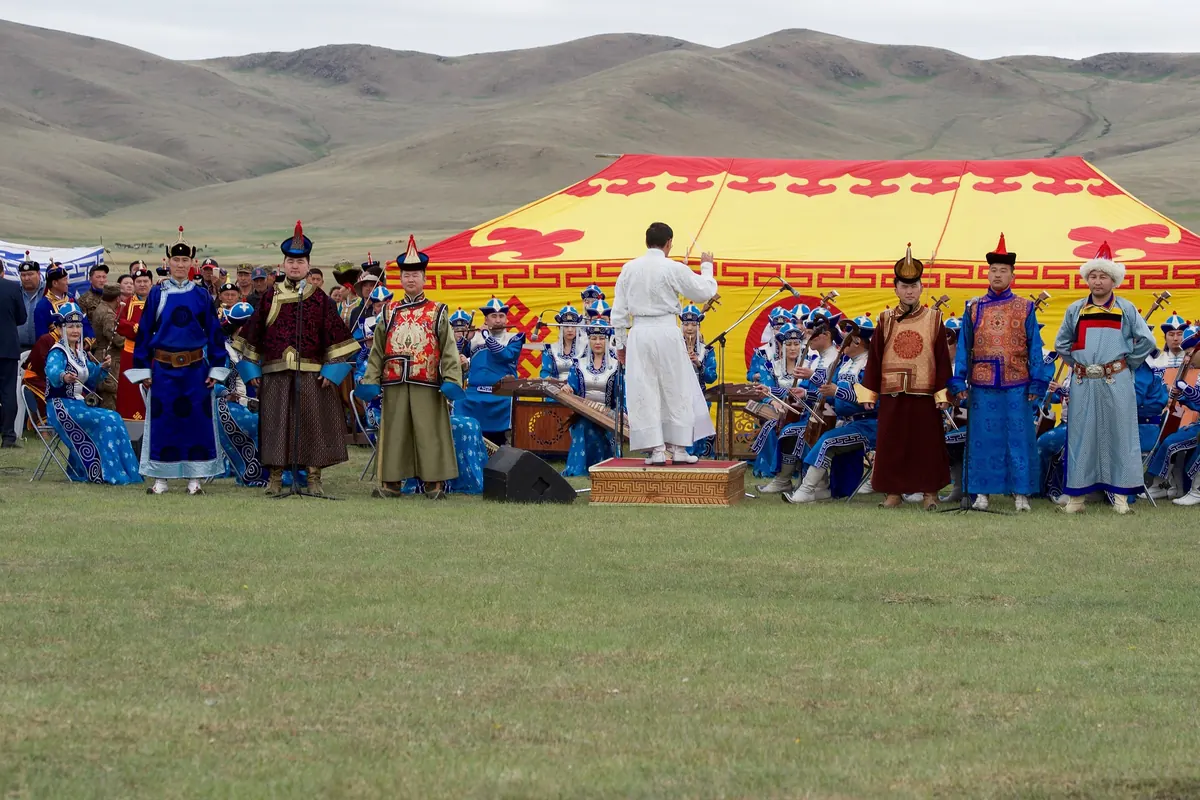
Naadam, held each year from 11 to 13 July, is the festival where this music lives outdoors. UNESCO notes that long song, khöömei, biyelgee dance and morin khuur playing all feature prominently there, next to wrestling, horse racing and archery. A show like this one covers the same arts indoors, in a seat, on a date you choose. Naadam week also brings crowds to the city, which is one more reason to treat a dated seat as the calmer route. If you are in the city in July you can do both; if you are not, the show is the practical route.
Booking terms
A refund in full is yours if you cancel a day or more before the start, provided the booking was made through GetYourGuide. If your trip is still taking shape, hold a date with reserve now and pay later. The fare shown is per person, and the booking page converts the whole party's total into your currency before payment. These terms belong to the GetYourGuide booking, not to anything arranged with a venue directly.
Groups and families
A group books one date together. The fare is per person, so a family or a table of friends sees the full amount for everyone on one screen, in your own currency, before paying anything. If there are children or anyone with particular needs in the party, check the booking page for the ticket's rules on the date you pick. And if the group changes size or plans, use the cancellation window: free up to 24 hours ahead, then settle the new numbers with a fresh booking.
Who this isn't for
Anyone expecting a dinner should look elsewhere, because the ticket is for the performance and not a meal. Nor is it right for anyone who wants to film all of it without paying, for travellers whose access needs a step-free route that nobody has confirmed, and for listeners who want modern Mongolian rock or pop, since this is a programme of traditional music. If only a winter weekday is free, check the calendar before you fall for the idea, because winter show days are fewer.
Frequently asked questions
How long is the show?
About 90 minutes. Every open date carries its own start time, which your confirmation repeats once you have chosen, so keep it to hand and arrive early.
Where is it held?
The booking page for your chosen date names the hall and its address. Check it there before you arrange transport, because that is the venue to follow, and show the address to your driver or save it in your map app.
Does it run every day?
No. Winter brings fewer show days, so some weekdays have no seats at all. Start with the calendar, see which dates are open, and plan the rest of your days around one of them.
Can I take photos or film?
Only if you pay the extra charge at the venue. Photographing or filming the performance carries a fee, settled there, so decide before you go in. If you skip it, keep your phone away during the show.
Is the hotel transfer included?
It is an option, not part of the plain ticket. Choose it when you pick your date, and read the transfer terms on the booking page, including whether the ride covers the trip back to your hotel.
Can I cancel?
Yes. If the booking was made through GetYourGuide, cancelling at least 24 hours before the start returns the money in full. Reserve now and pay later is also available, so a date can be held without paying today.
Sources