The long song
Urtiin duu: the Mongolian long song
The Mongolian long song stretches a few words across minutes. What urtiin duu is, when it is sung, how it is accompanied and why UNESCO lists it.
Book the Ulaanbaatar show ↗A song stretched out
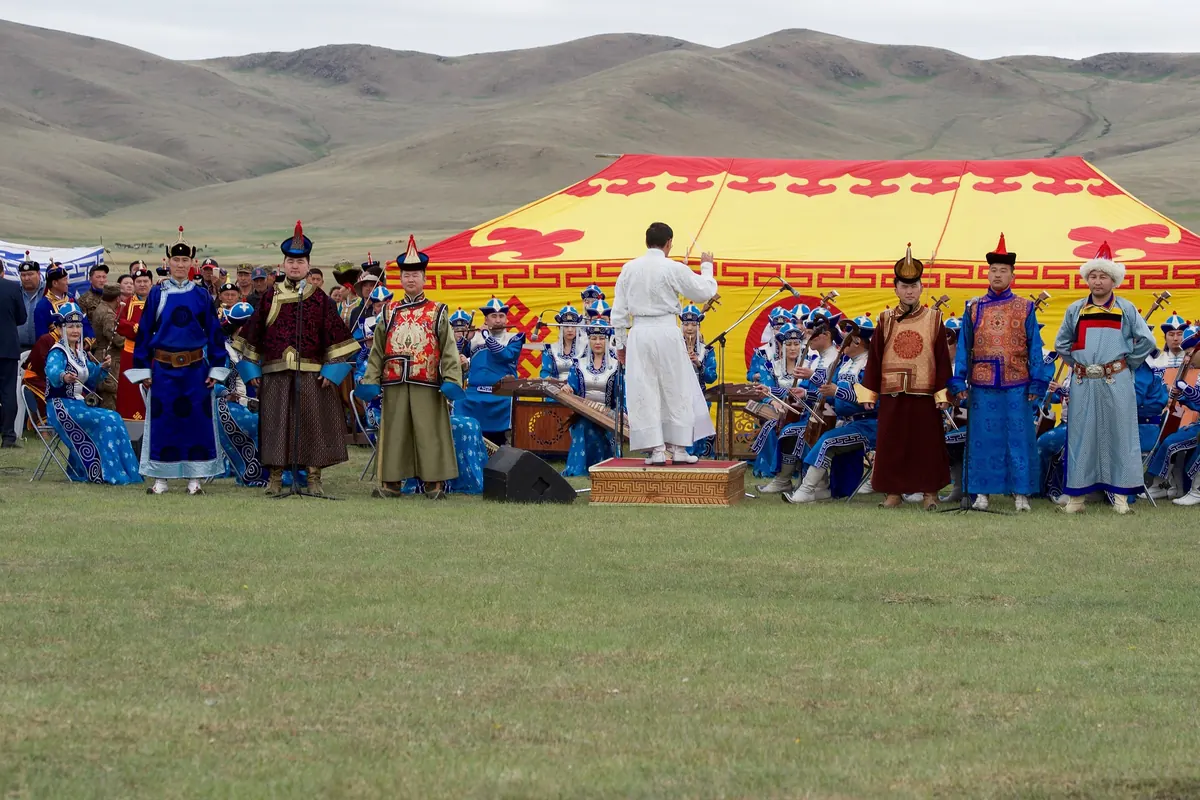
The name refers to length, but it describes the way a song is sung more than how long it lasts. Each syllable of the text is held for a long time, so a four-minute song may contain only about ten words. The tempo is slow, the intervals are wide and there is no fixed rhythm. The lack of a steady beat is the first thing to notice; the melody drifts and swells.
One of two great song forms
UNESCO calls urtiin duu one of the two major forms of Mongolian song. The other is the short song, bogino duu. As a ritual form of expression associated with important celebrations and festivities, the long song plays a distinct and honoured role in Mongolian society, UNESCO says. A programme that includes one is giving you the form that Mongolians themselves associate with ceremony.
Ornament and range
UNESCO describes the long song as a lyrical chant, marked by an abundance of ornament, falsetto, an extremely wide vocal range and a free compositional form. The rising melody is slow and steady, while the falling melody is often cut across by a lively rhythm. One named ornament is shuranhai: sustained notes with a deep vibrato on the vowels. Together these features make the long song one of the most recognisable sounds in Mongolian music.
When it is sung
The long song belongs to occasions, not to the radio. UNESCO lists weddings, the inauguration of a new home, the birth of a child and the branding of foals among the times it is performed by nomadic communities. It can also be heard at Naadam, the festival of wrestling, archery and horse racing. That tie to turning points helps explain why a long song can sound grave: it marks a moment, and the length of each phrase gives the moment room.
Three named styles
Singers describe long songs in three styles, named besreg, suman and aizam, roughly "minor", "ordinary" and "major" or majestic. They describe performance technique and character and not the length of a song. Aizam songs open ceremonies and feasts and test both the singer and the fiddle player. Programmes change, so nobody can promise a particular piece on a particular date.
Who plays along
In eastern Mongolia, a long song is usually sung with the morin khuur, and sometimes with an old flute called the limbe. Oirat groups in the west typically sing without accompaniment, or with the igil, a bowed instrument related to the fiddle. A singer who holds a note longest is more highly regarded, and the lyrics range from philosophical and religious to romantic and celebratory, often with horses as a recurring symbol.
Read next: Morin khuur: the horsehead fiddle
How old, and how fragile
UNESCO says the long song is widely believed to have originated 2,000 years ago, and that it has been recorded in literary works since the thirteenth century. Many regional styles survive. But since the 1950s, urbanisation and industrialisation have pushed aside nomadic life, and in places grassland has turned to desert, so many families have settled. Classical themes such as praise for the virtues of nomads lose relevance. UNESCO inscribed the long song in 2008 as a shared heritage of Mongolia and China.
The longest songs
Some long songs are monumental. Uvgin shuvuu khoyor, also called Jargaltain delger, can run to three hours when all 32 stanzas are sung. A stage programme will not give you that, and a song in a mixed show is a single piece of a few minutes. But the existence of such songs shows how far the form can stretch, and why a few minutes of long song on a stage is only a sample of it.
Listening in the hall
Resist the urge to wait for the tune to resolve. Let the first long note carry you for a while, notice where the voice leaps upward, and listen for the ornament that decorates the line before it falls. If a fiddle joins, follow how the player echoes the voice. The point is not to catch every word but to feel the pace of a song made for open land. Give it a minute before you judge it.
Sources