Season and city
Planning Ulaanbaatar around the show
How winter and Naadam change the show calendar, and what to see in Ulaanbaatar before or after a Mongolian music and dance show.
Book the Ulaanbaatar show ↗A city that moved many times
Ulaanbaatar was founded in 1639 as a nomadic Buddhist monastic centre, moved many times and settled at its present site in 1778. It was renamed Niislel Khüree after independence in 1911, and took the name Ulaanbaatar in 1924, usually translated as Red Hero, when it became capital of the Mongolian People's Republic. Sükhbaatar Square, in the government district, marks the centre today, and Gandan Monastery, still a working monastery, is a reminder of the city's first purpose.
Winter and the show calendar
Ulaanbaatar is described as the coldest national capital in the world, which Wikipedia puts down to its altitude, latitude and distance from the sea. Winters are long and bitterly cold, and temperature inversions deepen the January chill. The show follows the seasons: in winter it runs on fewer days of the week. So start with the booking calendar and treat the date as the fixed point, then plan the days around it, not the other way round. Dress for the walk between the car and the door, and give yourself time to arrive without hurrying on icy ground.
Naadam week
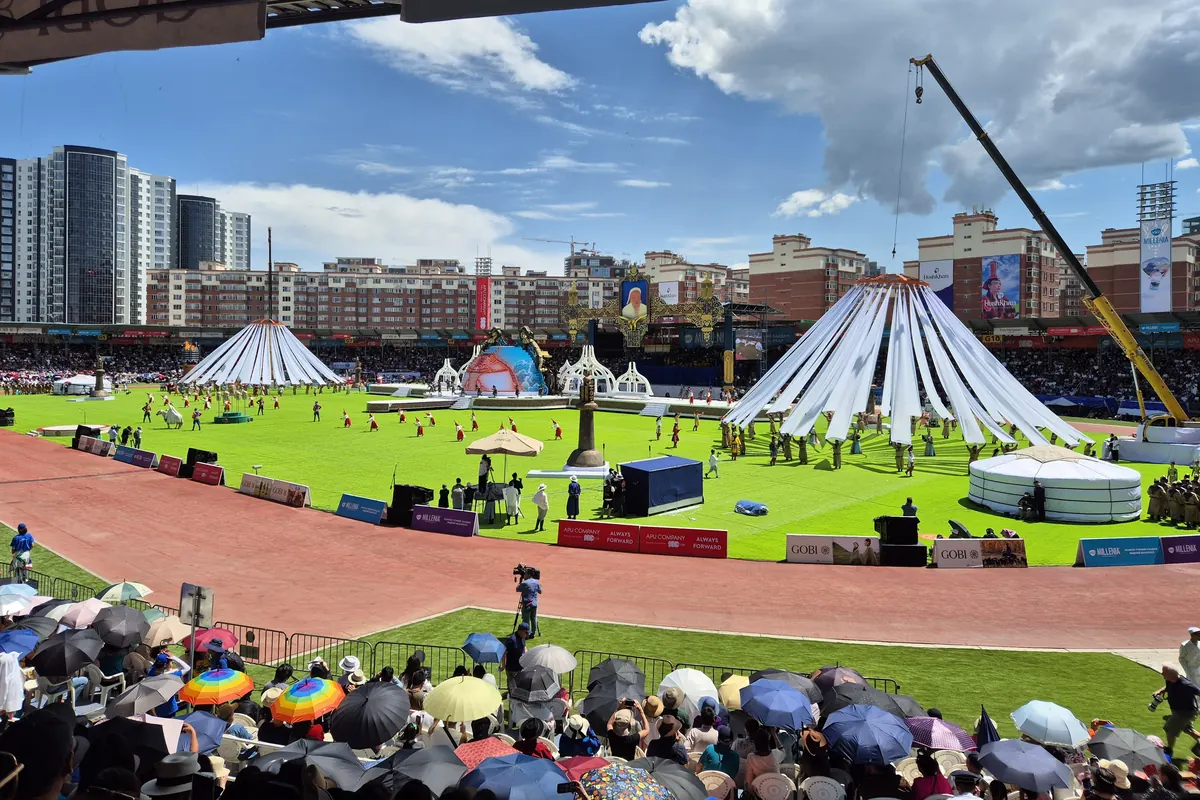
The national Naadam festival runs from 11 to 13 July, with wrestling, horse racing and archery; wrestling is a single-elimination tournament, and both men and women take part in the team archery. UNESCO notes that long song, khöömei, biyelgee and the morin khuur feature prominently in it, and the opening ceremony at the National Sports Stadium brings dancers, athletes, riders and musicians together. The city fills up and swells with visitors, so plan transport and meals with extra patience. The same arts are on stage in the show, on dates you pick, which is the calmer way to see them.
Sükhbaatar Square
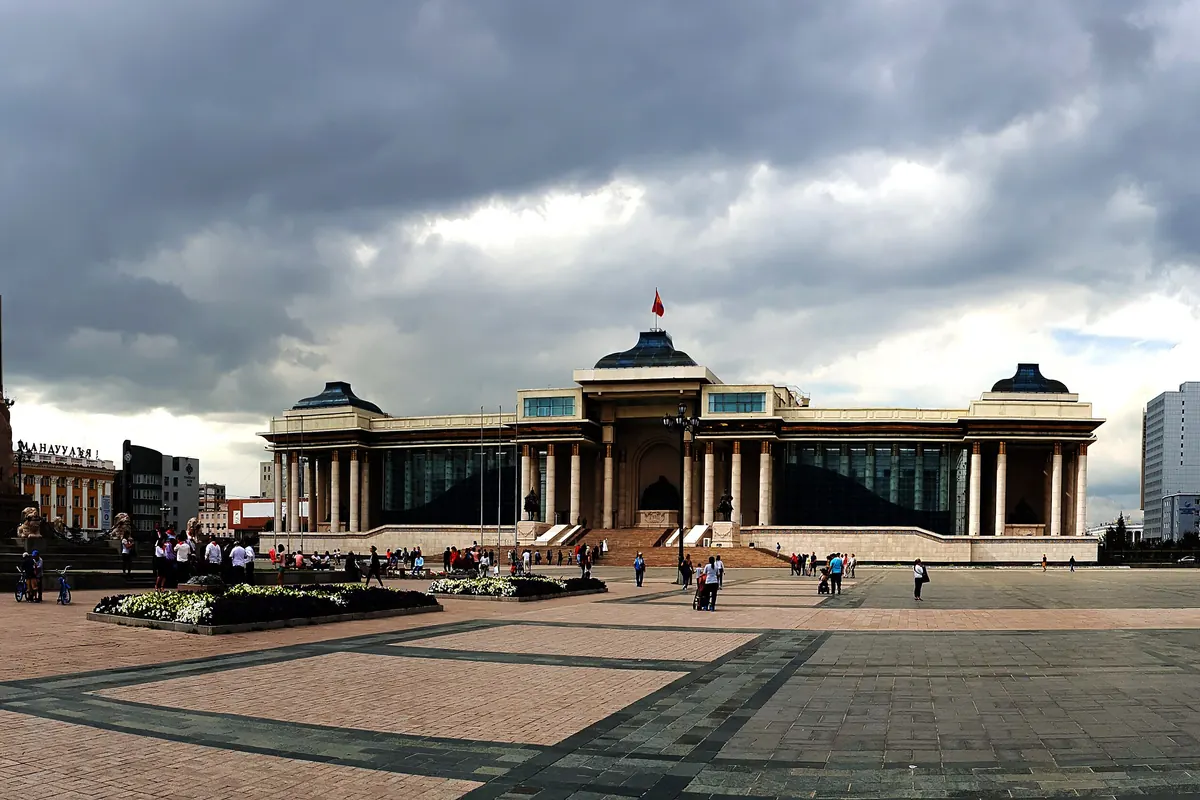
Sükhbaatar Square, in the government district, is the centre of Ulaanbaatar. It has an equestrian statue of Damdin Sükhbaatar and a statue of Chinggis Khan on its north side, and it is an easy place to pass an hour before or after a performance, and a useful landmark when you are trying to explain where you are to a driver. The square is also where Naadam's ceremonial horse tails begin their walk to the stadium.
Gandan Monastery
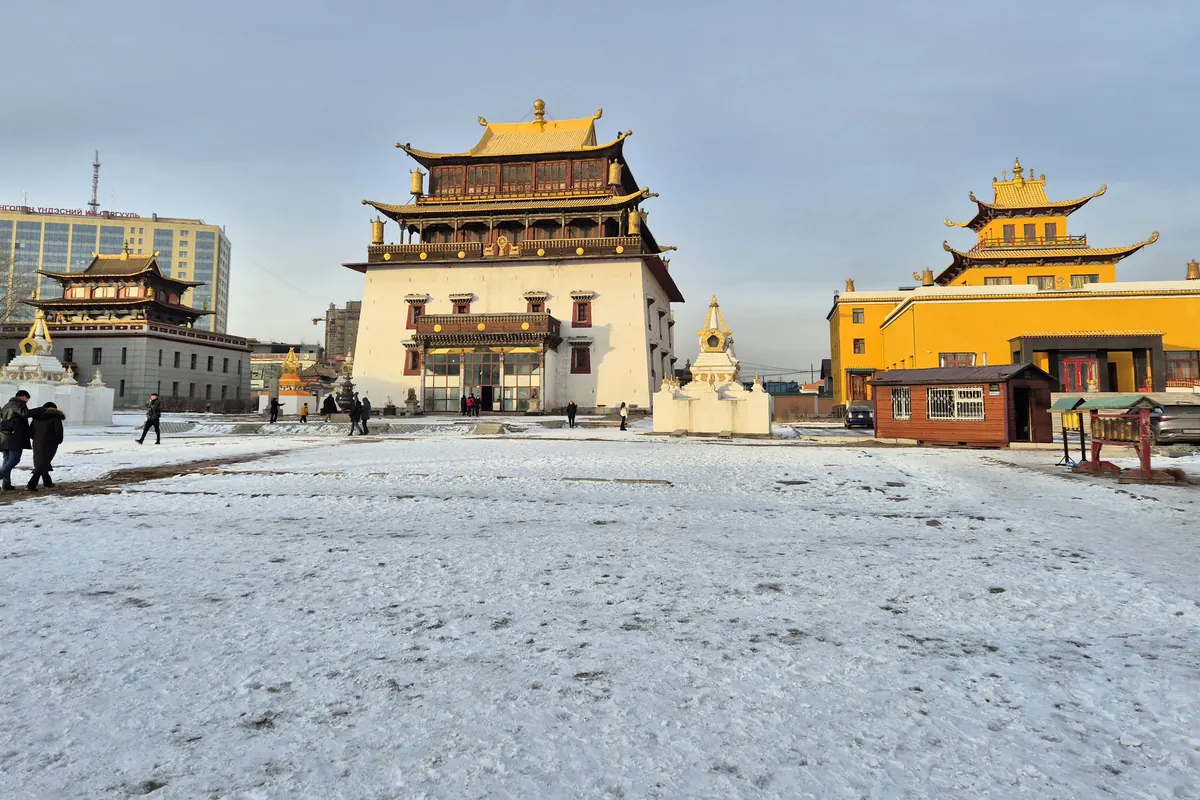
Gandantegchinlen Monastery was founded in 1809 and is now the centre of Buddhism in Mongolia. It houses a gilded bronze statue of Avalokiteśvara, and its Megzed Janraiseg temple was completed in 1913. It was closed in 1939 and reopened in January 1944. Its name is Tibetan for complete rejoicing. It sits in Bayangol District, and it works as a daytime stop when a show is the evening plan.
Ulaanbaatar, Ulan Bator, Oulan-Bator
The capital is written in several ways. Ulaanbaatar is the form this site uses, and you will also see Ulan Bator in English-language sources, Oulan-Bator in French and Ułan Bator in Polish. They all mean the same city. If you search a map or a booking calendar and a name does not match, try the other spellings.
Fitting it together
Choose the show date first, then arrange everything else around it. A show day can still hold a morning and an afternoon of sightseeing, and a square and a monastery fit comfortably into the hours before. Leave a gap between the last sight and the hall, so a slow taxi or a wrong turn does not cost you the start of the show. Eat before or after, since the ticket is for the performance. If you take the hotel-transfer option, read its terms on the booking page, including whether the ride covers the trip back. Keep the confirmation on your phone, and check the hall named for your date. After that, the squares and the monastery are easy additions, and the rest of the days are free for the countryside.
Sources